Table of Contents
ToggleIntroduction: Boot Picker Not Showing Installer
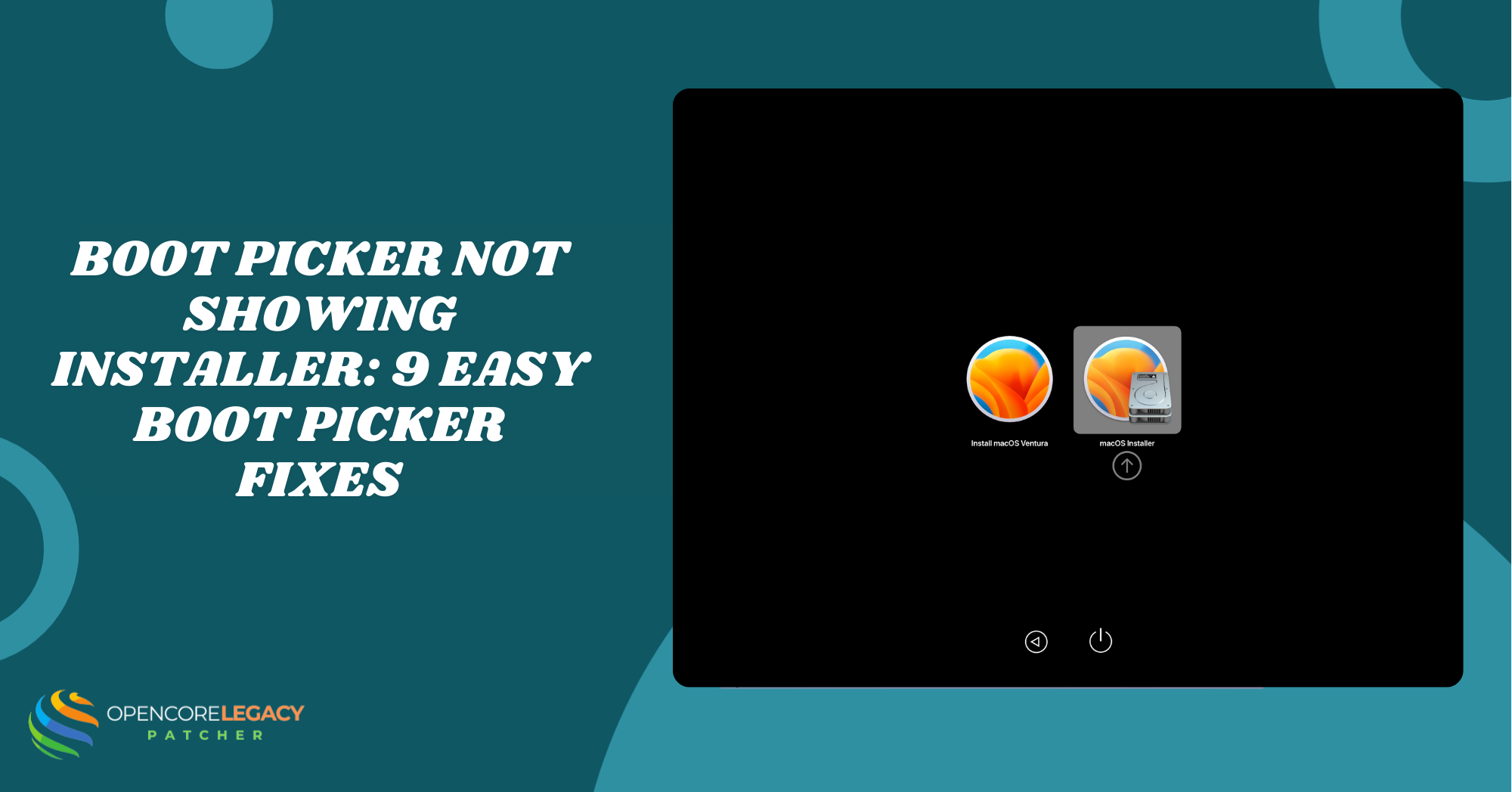
OpenCore Legacy Patcher is a lifesaver for older Macs, letting you run newer macOS versions that your system wouldn’t usually support. The boot picker plays a starring role here; it’s what allows your Mac recognize the installer and start the macOS installation smoothly.
But sometimes, the boot picker doesn’t show up, leaving you stuck and confused. This can happen due to firmware boot-order issues, USB drive formatting problems, or corrupted EFI folders. Understanding these common hiccups is the first step to getting your Mac back on track and ready for a seamless installation.
What Causes the OpenCore Legacy Patcher Boot Picker Not to Show the Installer
When your OpenCore Legacy Patcher boot picker doesn’t show the installer, it usually points to a few key issues in how your Mac interacts with OpenCore and your USB installer. Understanding these causes helps you troubleshoot quickly and get your system ready for installation without stress.
Boot Order Issues in Mac Firmware
Your Mac checks devices in a specific order when starting up. If the USB drive or OpenCore EFI partition isn’t prioritized, the boot picker won’t appear. Adjusting the startup disk settings or holding the Option key during boot often resolves this.
EFI Folder Scanning Failures
OpenCore scans the EFI folder for essential files to display the installer. Missing, misplaced, or corrupted drivers and config files can block this process. Ensuring the EFI folder is complete and correctly organized is crucial.
USB Drive Structure and Formatting Problems
An improperly formatted USB drive can prevent the boot picker from detecting it. OpenCore requires a GUID Partition Table (GPT) and a FAT32-formatted EFI partition. Double-checking the format and structure ensures the installer is visible.
Incompatible macOS Version or Installer Corruption
If the installer is damaged or doesn’t match your Mac model, OpenCore will skip it. Always verify the macOS installer’s integrity and confirm compatibility to avoid this issue.
Conflicting Security Settings (Secure Boot & SIP)
Mac security features like Secure Boot or System Integrity Protection can block OpenCore from launching the installer. Temporarily adjusting these settings can restore visibility in the boot picker. This way, each potential cause is clear and actionable, helping users understand exactly why their OpenCore boot picker might be hiding the installer.
How to Fix OpenCore Boot Picker Issues
When your OpenCore Legacy Patcher boot picker isn’t showing the installer, there are several practical fixes you can try. Each step focuses on ensuring your Mac correctly detects the EFI and loads the installer smoothly.
Verifying Boot Order in Mac Startup Manager
The first step is to ensure your USB or OpenCore EFI without USB is prioritized in the boot sequence. Restart your Mac, hold the Option key, and check if the USB drive appears. If it doesn’t, adjust the startup disk settings in macOS or the OpenCore configuration to ensure the EFI partition is first in line.
Scanning and Repairing EFI Partition
Sometimes the EFI partition itself may have issues. You can scan it to check for missing or corrupted files. Repair tools or manually check the config. Properly placed plists, drivers, and kexts often resolve boot picker problems.
Correct USB Drive Preparation for OpenCore Installer
A properly prepared USB drive is essential. Make sure:
- The partition scheme is GUID.
- The EFI partition is FAT32 formatted.
- macOS installer files are correctly copied.
This ensures OpenCore can detect the installer without hiccups.
Resetting NVRAM and SMC to Restore Boot Picker Functionality
Sometimes, firmware settings stored in NVRAM or SMC prevent the boot picker from appearing. Resetting NVRAM and SMC refreshes these settings, often making the USB drive or EFI partition visible again.
Ensuring macOS Installer Compatibility and Integrity
Even with a perfect EFI and USB, a corrupted or incompatible installer can stop OpenCore from showing it. Verify the macOS installer checksum, ensure it matches your Mac model, and redownload if necessary to prevent detection issues. This combination of boot order checks, EFI repairs, USB prep, and firmware resets covers most scenarios where the boot picker doesn’t display the installer.
How to Fix OpenCore Boot Picker Issues
If your OpenCore Legacy Patcher boot picker isn’t showing the macOS installer, don’t stress! This is a common hiccup, especially on older Macs when you Try To Update Older Mac Using OpenCore. Luckily, several practical fixes ensure your Mac detects the EFI correctly and that the installer loads smoothly. With a few checks and adjustments, you can get your system ready for a successful installation.
Verifying Boot Order in Mac Startup Manager
One of the most common reasons the boot picker doesn’t appear is simply the boot order. Your Mac looks at devices in a set sequence when starting up. If the USB or EFI partition isn’t prioritized, OpenCore won’t show the installer. Restart your Mac, hold down the Option key, and check whether your USB drive appears. If it doesn’t, go into your startup disk settings and make sure the EFI partition is first. A minor tweak here often solves the problem instantly.
Scanning and Repairing EFI Partition
The EFI folder is like the “brain” of OpenCore; it tells your Mac how to load the installer. If any files are missing, misplaced, or corrupted, the boot picker can fail. Check that config.plist, drivers, and kexts are all in the right place. You can use disk utilities to scan for errors or manually inspect the EFI folder. Even a single missing driver can prevent the boot picker from showing up, so this step is super important.
Correct USB Drive Preparation for OpenCore Installer
OpenCore is picky about USB drives, and a misformatted drive can stop the boot picker from detecting it. Make sure your USB:
- Uses the GUID partition scheme
- Has an FAT32-formatted EFI partition
- Contains the macOS installer files exactly where they need to be
A well-prepared USB ensures OpenCore sees the installer immediately, avoiding unnecessary frustration. If your drive isn’t set up correctly, even a perfect EFI folder won’t help.
Resetting NVRAM and SMC to Restore Boot Picker Functionality
Sometimes, the issue isn’t your EFI or USB; it’s stored firmware settings in NVRAM or SMC. These can block the boot picker from showing your installer. Resetting NVRAM clears stored boot preferences, and resetting SMC refreshes system management functions. After doing this, restart your Mac and check the boot picker; it often magically appears again.
Ensuring macOS Installer Compatibility and Integrity
Even with everything else perfect, a damaged or incompatible macOS installer or Unupdated OpenCore Legacy Patcher can prevent OpenCore from showing it. Always verify the installer’s checksum to make sure it’s complete, and confirm it matches your Mac model. If there’s any doubt, redownload a fresh copy. This prevents frustrating situations where everything else seems fine, but the installer won’t show.
By combining these steps, boot order tweaks, EFI repair, USB prep, firmware resets, and installer verification, you cover nearly all scenarios where the OpenCore boot picker might hide the installer. It’s a systematic approach that saves time and frustration, especially when working on older Macs with tricky configurations.
Advanced Troubleshooting for Boot Picker Problems
When the usual fixes don’t bring back the OpenCore Legacy Patcher boot picker, it’s time to dive deeper. Advanced troubleshooting focuses on the EFI setup, OpenCore configuration, and detailed diagnostics to pinpoint why the installer isn’t showing. These steps help tackle more stubborn issues and get your Mac ready for a smooth installation.
Checking OpenCore Config.plist for Correct Entries
The config.plist is the heart of OpenCore; it tells your Mac which devices and installers to recognize. Incorrect or missing entries can prevent the boot picker from appearing. Carefully check that the BootOrder, APFS driver settings, and macOS installer paths are correct. Even small mistakes in this file can block the installer.
Rebuilding OpenCore EFI and Updating Drivers
If the EFI folder is outdated or misconfigured, the boot picker might fail. Rebuilding the OpenCore EFI from scratch and ensuring all drivers are up to date can solve this problem. Make sure essential drivers, such as OpenRuntime.efi and filesystem drivers, are included and placed correctly in the EFI folder.
Using Verbose Mode to Diagnose Boot Picker Errors
Verbose mode is like a magnifying glass for boot problems. By holding Command + V during boot, you can see detailed logs of what’s happening behind the scenes. Look for errors related to EFI, drivers, or disk recognition, it often reveals exactly why the boot picker isn’t showing the installer. This is an invaluable tool for advanced troubleshooting. These steps give you more control and insight, ensuring that even tricky OpenCore boot picker issues can be identified and fixed efficiently.
Fixing Common File System or Partition Recognition Issues
If the OpenCore boot picker isn’t showing the installer, it’s often because the Mac can’t recognize the USB drive or EFI partition. This usually happens due to incorrect formatting, partition type, or minor file system errors. Make sure your USB drive uses a GUID partition scheme and that the EFI partition is FAT32-formatted. Reformatting the drive or running disk repair tools can fix corrupted sectors or missing files. Keeping the USB drive clean, properly structured, and organized ensures that OpenCore reliably detects the installer every time.
Preventive Measures for Smooth OpenCore Booting
Taking preventive steps can save a lot of headaches when using OpenCore Legacy Patcher. Proper preparation, organization, and regular maintenance help ensure the boot picker always shows your macOS installer and keeps your system stable.
Best Practices for USB Creation and EFI Organization
A well-prepared USB drive and an organized EFI folder are key to a smooth boot. Follow these tips:
- Use a GUID Partition Table (GPT) for the USB drive.
- Format the EFI partition as FAT32.
- Ensure all drivers, kexts, and config.plist files are correctly placed.
- Keep folders tidy to reduce detection errors and boot issues.
Keeping OpenCore and macOS Installer Updated
Updates fix bugs and improve hardware support. Make it a habit to:
- Check for the latest OpenCore releases.
- Use the newest macOS installer compatible with your Mac.
- Update drivers and patches within the EFI folder regularly.
Managing Mac Security Settings without Breaking Boot Picker
Mac security features can sometimes block OpenCore. To avoid problems:
- Adjust Secure Boot settings only when necessary.
- Temporarily disable SIP if required for installation.
- Re-enable security features after successful booting.
Regular Backups and EFI Snapshots
Backing up is essential to avoid data loss and EFI issues. Recommended practices:
- Create regular macOS backups using Time Machine or other tools.
- Take snapshots of your EFI folder before making changes.
- Restore from backups if updates or tweaks cause boot problems.
Following these preventive measures ensures a smooth OpenCore experience, keeps your Mac safe, and prevents boot picker errors before they happen.
Conclusion
Dealing with the OpenCore Legacy Patcher boot picker not showing the installer can feel tricky, but with the right approach, it’s completely manageable. By checking boot order, repairing EFI partitions, preparing your USB correctly, and keeping both OpenCore and macOS installers updated, most issues can be avoided.
Adding preventive measures such as backups, EFI snapshots, and careful management of Mac security settings keeps your system running smoothly. With a bit of attention to detail, your Mac can enjoy the latest macOS versions without the frustration of missing installers or hidden boot pickers.
FAQs – OpenCore Legacy Patcher Boot Picker Not Showing Installer
Why doesn’t my Mac show the OpenCore USB in the boot menu?
This usually happens if the USB drive isn’t correctly formatted, the EFI partition isn’t recognized, or the boot order in your Mac’s firmware doesn’t prioritize the USB drive. Double-check the drive structure and hold the Option key during startup to see if it appears.
Can a corrupted EFI folder prevent the installer from appearing?
Yes, OpenCore relies on a correctly organized EFI folder with all necessary drivers and config.plist files. Missing or corrupted files can prevent the boot picker from loading, so always verify the EFI contents before troubleshooting further.
How do I fix a black screen after selecting the OpenCore boot option?
A black screen can result from incompatible graphics drivers or incorrect configuration.plist settings, or missing kexts. Boot in verbose mode to identify errors, update drivers, and ensure all necessary patches are applied.
Is USB formatting critical for OpenCore Legacy Patcher booting?
Absolutely. OpenCore requires a GUID Partition Table (GPT) with an FAT32-formatted EFI partition. Incorrect formatting can prevent the boot picker from detecting the installer entirely.
Can resetting NVRAM/SMC solve boot picker issues?
Yes, resetting NVRAM clears stored boot preferences, and resetting SMC refreshes system management settings. This often makes previously hidden USB drives or EFI partitions visible to the boot picker.
Does the OpenCore version affect the installer visibility?
It can. Older OpenCore versions may lack updated drivers or hardware support, preventing the installer from showing. Always use the latest stable release compatible with your Mac.
How do I confirm my macOS installer is compatible with my Mac model?
Check your Mac model and match it with the supported macOS versions. Verify the installer’s checksum to ensure it’s intact and hasn’t been corrupted during download.
Are there risks to spoofing Mac models to make OpenCore recognize the installer?
Yes. Spoofing can allow unsupported Macs to boot newer macOS versions, but it may cause stability issues, app incompatibility, or system crashes. Use it cautiously and always back up your data first.
Read more: