Introduction: Mac Stuck At Apple Logo Fix
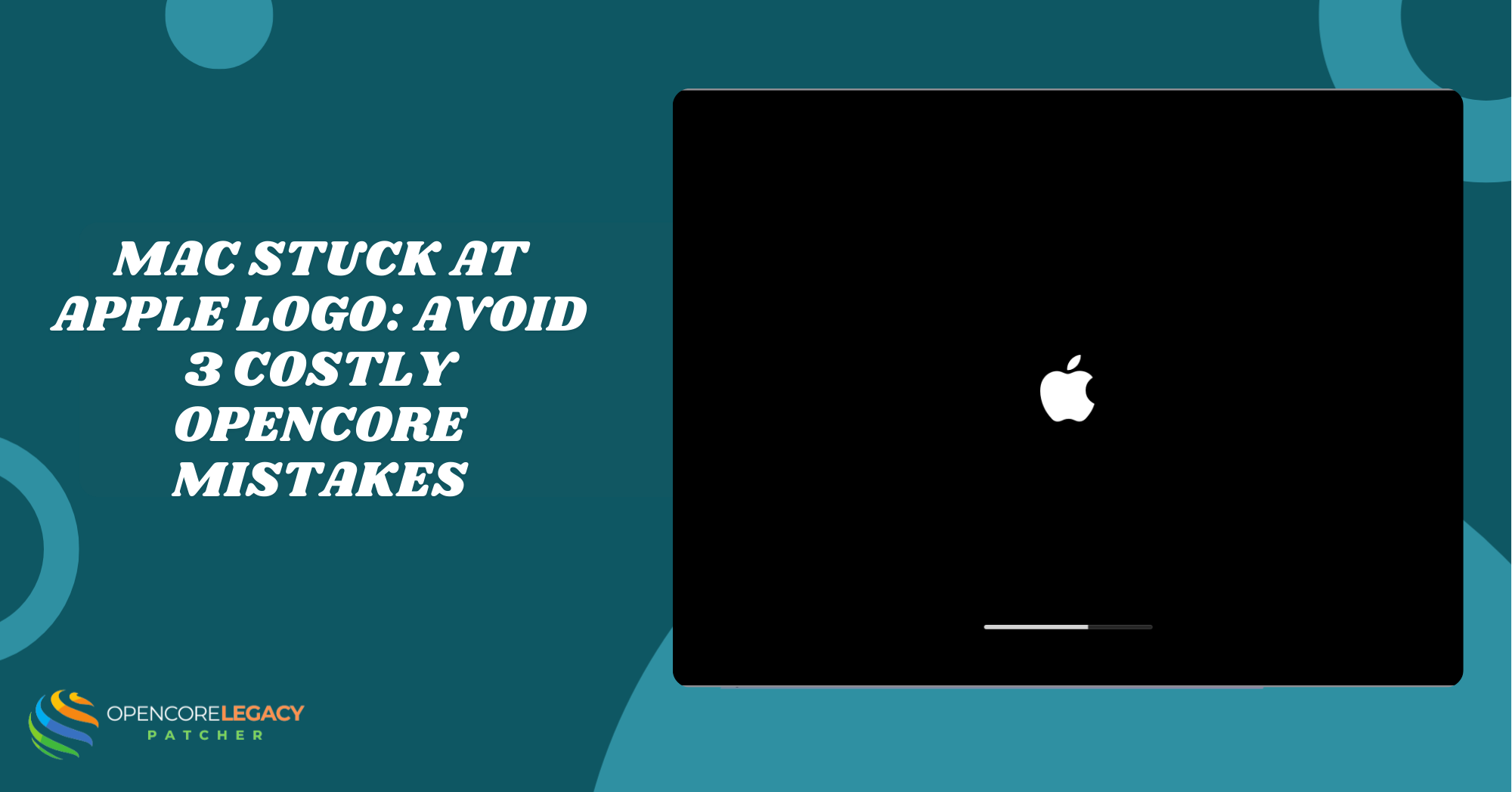
Seeing your Mac freeze at the Apple logo after installing OpenCore Legacy Patcher can be worrying, but it’s actually a fairly common issue on older or unsupported Macs. This usually happens when the bootloader isn’t fully compatible with macOS, the EFI folder is misconfigured, or firmware conflicts occur.
Knowing why it happens is essential, and following safe recovery methods such as booting in Safe Mode, checking your EFI settings, or rolling back OpenCore changes can help you fix the problem without losing your files.
What Causes a Mac to Get Stuck at the Apple Logo
When your Mac freezes at the Apple logo after installing OpenCore Legacy Patcher, it’s usually a sign that something in the startup process isn’t working correctly. This problem can stem from several areas, including the bootloader, EFI configuration, firmware compatibility, or even recent macOS updates.
Understanding the root causes helps you take the proper recovery steps, whether it’s using Safe Mode, checking your EFI folder, or rolling back OpenCore changes. By identifying why your Mac won’t boot, you can fix it safely without risking data loss.
Common Boot Issues with OpenCore Legacy Patcher
Sometimes, after installing OpenCore Legacy Patcher, your Mac may fail to boot correctly. This often happens when the bootloader isn’t properly configured or conflicts with macOS settings. Symptoms include freezing at the Apple logo, slow startup, or repeated restarts. Ensuring a clean installation and proper configuration usually prevents these common issues.
Firmware Incompatibility and Unsupported Mac Models
Older Macs may have firmware that isn’t fully compatible with newer macOS versions patched by OpenCore. Unsupported Mac models can struggle to communicate with the bootloader, causing the system to halt at the Apple logo. Checking model compatibility before installation is crucial to avoid this problem.
Corrupted EFI or Improper Bootloader Configuration
A misconfigured or corrupted EFI folder is one of the main reasons a Mac gets stuck. The EFI folder contains the bootloader and essential files that tell macOS how to start. Missing or wrong files, incorrect plist settings, or bad kexts can all stop the Mac from booting.
Conflicts with macOS Updates
macOS updates can sometimes conflict with OpenCore patches. Even if everything worked before, a system update may overwrite bootloader settings or incompatible drivers, causing the Mac to freeze at startup. Rolling back updates or updating OpenCore to a compatible version can resolve these conflicts.
How to Diagnose the Issue Safely
When your Mac is stuck at the Apple logo after an OpenCore Legacy Patcher install, careful diagnosis is the first step. Jumping into recovery without understanding the cause can lead to data loss or more boot problems. By using safe methods like Safe Mode and Verbose Mode, and by checking your EFI and macOS versions, you can pinpoint the issue and fix it without risking your files.
Using Safe Mode to Isolate the Problem
Safe Mode is a lifesaver for troubleshooting startup issues. It loads only essential drivers and turns off third-party extensions, helping you see whether the Mac can boot with minimal interference. If your Mac starts in Safe Mode, the problem is likely with a kext, bootloader, or corrupted file, rather than a hardware failure.
Booting in Verbose Mode for Detailed Error Logs
Verbose Mode displays real-time boot messages on your screen, revealing exactly where the startup is failing. By reviewing these logs, you can identify corrupted files, missing drivers, or boot process conflicts. It’s like getting a behind-the-scenes look at what your Mac is trying (and failing) to do.
Checking EFI Folder and USB Boot Integrity
The EFI folder is crucial for OpenCore to work correctly. A missing file, wrong configuration, or corrupted USB installer can halt the boot process. Make sure your EFI folder matches the recommended setup, and check your USB installer for errors or incomplete files.
Verifying macOS Version Compatibility
Not all macOS versions play nicely with older Macs patched through OpenCore Some Macs can Get Slow After OpenCore Legacy Patcher. Installing an incompatible macOS can freeze the system at startup. Confirm your macOS version is fully compatible with your Mac model and OpenCore build to prevent boot errors and avoid repeated troubleshooting. I can also create a small table summarizing these diagnostic methods, their purposes, and quick tips, making it super reader-friendly and SEO-optimized. Do you want me to do that next?
How to Fix a Mac Stuck at the Apple Logo
If your Mac is stuck at the Apple logo after installing OpenCore Legacy Patcher, there are several ways to safely fix it. You can try system resets, restore a backup EFI folder, roll back OpenCore, or reinstall macOS. These steps help get your Mac back to normal without risking your files.
Resetting NVRAM and SMC for Boot Errors
Sometimes your Mac freezes due to outdated settings or hardware glitches. Resetting NVRAM and SMC can:
- Clear outdated startup configurations that may prevent booting
- Fix hardware or power-related recognition issues
- Help your Mac detect connected devices properly
Restoring a Backup EFI Folder
A broken or misconfigured EFI folder can cause the Mac to freeze.
- Replace the current EFI folder with a working backup
- Ensure all kexts and plist files match your Mac model
- Double-check OpenCore settings before restarting
Using OpenCore Legacy Patcher Rollback Options
If a recent patch caused the startup issue, rolling back to a previous version can restore stability.
- Revert to a previously stable version of OpenCore
- Undo recent changes that conflict with macOS
- Prevent repeated boot loops using a verified rollback build
Reinstalling macOS Without Losing Data
Reinstalling macOS Using OpenCore can refresh system files while keeping your personal files safe.
- Use a bootable USB installer compatible with your Mac
- Keep EFI and OpenCore settings intact during reinstall
- Follow prompts carefully to ensure applications and documents remain safe
I can also create a simple table summarizing each fix, its purpose, and quick tips, making this section easier for readers to follow. Do you want me to do that?
Advanced Recovery Techniques
When standard fixes don’t work, advanced recovery methods can help get your Mac running again after it’s stuck at the Apple logo. These techniques are beneficial for unsupported or older Macs patched with OpenCore, and they allow you to safely repair the system or recover important files without causing further damage.
Creating a Bootable USB Installer for Unsupported Macs
A bootable USB installer can help reinstall macOS or troubleshoot startup issues on unsupported Macs.
- Prepare a USB drive with sufficient space and proper formatting
- Use a compatible macOS version for your Mac model
- Ensure OpenCore settings are correctly applied to the installer
Patching macOS Installer for Legacy Hardware.
Older Macs often need custom patches to install or run macOS smoothly.
- Apply necessary patches for unsupported hardware
- Include required kexts and drivers for proper functionality
- Test the patched installer in a safe environment before complete installation
Using Target Disk Mode to Recover Files
Target Disk Mode allows you to access files on a Mac that won’t boot by connecting it to another Mac.
- Connect the stuck Mac to a working Mac using a Thunderbolt or USB-C cable
- Mount the Mac’s drive as an external disk
- Copy essential files safely before attempting repairs or reinstalling
Terminal Commands for EFI and Bootloader Repair
Sometimes, repairing the EFI or bootloader manually is needed for OpenCore systems.
- Use Terminal in recovery mode to check EFI folder integrity
- Apply commands to fix corrupted plist files or missing kexts
- Only perform these steps if you are comfortable with command-line operations
Preventing Future Boot Failures
Keeping your Updated Mac stable after using OpenCore Legacy Patcher comes down to preparation. By ensuring compatibility, backing up essential files, monitoring updates, and following safe recovery practices, you can prevent future freezes and boot issues. These steps help maintain a smooth startup and protect your data.
Keeping OpenCore and macOS Versions Compatible
Make sure the OpenCore version you use matches your macOS version. Mismatched versions can cause crashes or startup freezes. Check compatibility notes before installing any new patches or system updates to avoid problems.
Proper EFI Configuration and Backup Strategies
A well-configured EFI folder is key to safe booting. Always keep a backup of a working EFI setup so you can restore it if something goes wrong. This reduces troubleshooting time and protects your Mac from serious startup errors.
Monitoring System Updates on Legacy Macs
Not all macOS updates are suitable for older or unsupported Macs, You might want to Restore Mac After OpenCore. Keep an eye on update notes and avoid those that could conflict with OpenCore or your hardware. This ensures your system stays stable and reduces the risk of freezing at startup.
Best Practices for Safe Mode and Rollback Usage
Safe Mode and rollback options are valuable tools when troubleshooting, but they should be used carefully. Boot in Safe Mode to test changes and use rollback only with verified, stable builds. This approach helps you recover safely while keeping your Mac fully functional.
Troubleshooting Common Boot Errors
Even after using OpenCore Legacy Patcher, Macs can still experience startup problems. Understanding the common boot errors and their causes helps you troubleshoot effectively and get your Mac running without risking data loss. Here are the most frequent issues and how to approach them safely.
Black Screen After Selecting OpenCore
A black screen usually means the bootloader isn’t communicating properly with macOS.
- Check graphics drivers and kexts for compatibility
- Verify the OpenCore configuration in the EFI folder
- Try booting in Verbose Mode to identify where it stops
Continuous Reboot Loop Post-Install
A reboot loop occurs when macOS or OpenCore can’t complete startup.
- Reset NVRAM and SMC to clear system errors
- Restore a known working EFI folder
- Use rollback options if a recent patch triggered the loop
USB Not Recognized in Boot Picker
If your Mac doesn’t see the USB installer, it won’t boot properly.
- Confirm the USB is formatted correctly (Mac OS Extended or APFS)
- Recreate the bootable USB with a compatible macOS version
- Ensure OpenCore EFI is correctly installed on the USB
macOS Installer Freezing During Preparation
Installer freezes can occur if system files or USB media are corrupted.
- Check the USB installer for corruption
- Boot in Safe Mode to isolate system conflicts
- Apply necessary patches for legacy hardware to ensure compatibility
I can also create a compact table summarizing each standard boot error, its cause, and a quick fix, making it easier for readers to follow and improving SEO readability. Do you want me to make that table?
Conclusion
Dealing with a Mac stuck at the Apple logo after OpenCore Legacy Patcher install can feel frustrating, but with the proper steps, it’s completely fixable. By diagnosing the issue safely, using recovery techniques, restoring backups, and keeping your system and OpenCore compatible, you can get your Mac running smoothly again.
Taking preventive measures, such as monitoring updates, maintaining EFI backups, and using Safe Mode wisely, helps prevent future boot problems. With patience and careful troubleshooting, even older Macs can stay functional and reliable.
FAQs
Q1: Why is my Mac stuck at the Apple logo after OpenCore installation?
This usually happens due to misconfigured EFI folders, incompatible macOS or OpenCore versions, corrupted kexts, or firmware conflicts on older Macs.
Q2: Can I recover my Mac using Safe Mode without reinstalling macOS?
Yes! Safe Mode loads only essential drivers and turns off third-party extensions, allowing you to troubleshoot and fix minor startup issues without reinstalling macOS.
Q3: How do I use Verbose Mode to identify boot issues?
Boot your Mac in Verbose Mode to see detailed startup logs. This helps pinpoint exactly where the system is freezing, such as a problematic kext or an OpenCore configuration issue.
Q4: Will resetting NVRAM or SMC fix this problem?
Resetting NVRAM and SMC can resolve many typical startup issues by clearing corrupted settings and resolving hardware recognition errors, but it may not resolve deep EFI or macOS conflicts.
Q5: Is it safe to rollback OpenCore Legacy Patcher to a previous version?
Yes, rolling back to a previously stable OpenCore build is safe and often recommended if a recent patch caused boot issues. Always use verified rollback versions.
Q6: How do I restore my EFI folder from backup?
Replace the current EFI folder with a verified backup, ensuring all kexts and plist files match your Mac model. Double-check OpenCore settings before rebooting to prevent new issues.
Q7: Can a macOS update cause OpenCore boot errors on unsupported Macs?
Yes. Updates may overwrite OpenCore settings or introduce incompatible drivers, leading to startup freezes or repeated boot loops on unsupported Macs.
Q8: What are the best preventive measures to avoid Apple logo freezes in the future?
Keep OpenCore and macOS versions compatible, maintain working EFI backups, monitor updates carefully, and use Safe Mode or rollback options wisely to prevent future startup problems.
Read More: